
The Timeless Charm of Austria
Austria is a country that perfectly blends imperial history, artistic brilliance, and breathtaking natural landscapes. From the grandeur of Vienna’s palaces to the enchanting melodies of Salzburg and the serene beauty of Alpine villages, Austria offers a rich and immersive cultural experience. The country has long been a hub of classical music, fine arts, and architectural excellence, attracting visitors from around the world who seek to uncover the essence of European heritage. Every corner of Austria tells a story, whether it is through the opulent halls of the Habsburgs, the birthplace of Mozart, or the mountain traditions that have remained unchanged for centuries.

Vienna’s Palatial Grandeur
Vienna, Austria’s capital, is a city that exudes imperial splendor. Its palaces, museums, and grand boulevards stand as reminders of the Habsburg Empire’s enduring legacy. Among its most iconic landmarks, Schönbrunn Palace remains one of the most visited sites in Austria. This former summer residence of the Habsburgs boasts over 1,400 rooms, opulent interiors, and stunning gardens that reflect the influence of Baroque and Rococo styles. Visitors can explore the lavish living quarters of Empress Maria Theresa, the famous Mirror Room where a young Mozart once performed, and the beautifully landscaped grounds that include fountains, sculptures, and the impressive Gloriette.
Hofburg Palace, the former imperial residence in the heart of Vienna, offers another glimpse into Austria’s monarchical past. It now houses several museums, including the Sisi Museum, which showcases the life of Empress Elisabeth, and the Austrian National Library, one of the most magnificent libraries in the world. The palace complex also includes the Spanish Riding School, where the world-famous Lipizzaner horses perform classical dressage in a setting that has remained unchanged for centuries.
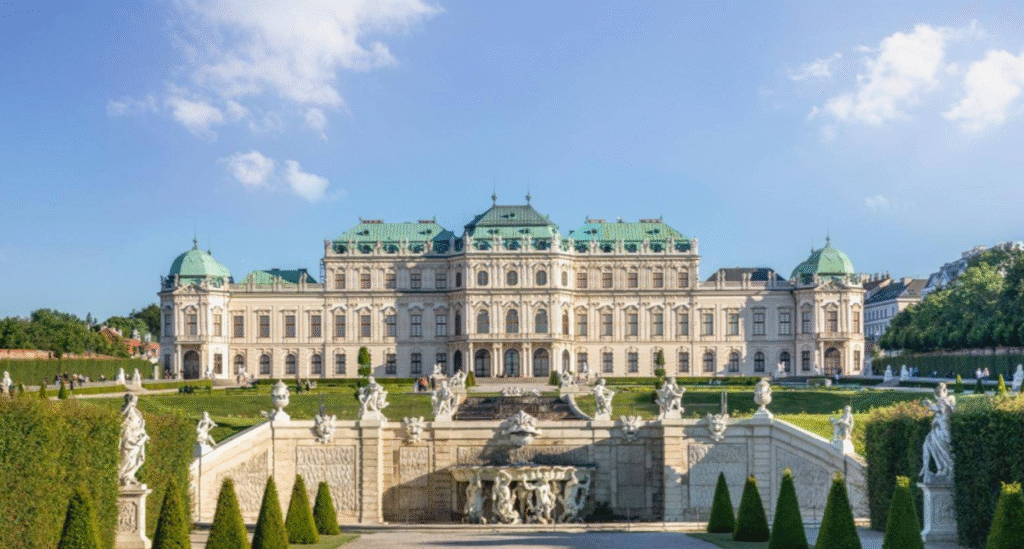
Belvedere Palace, an architectural masterpiece of the Baroque period, is home to one of Austria’s most treasured art collections. The Upper Belvedere features Gustav Klimt’s iconic painting “The Kiss,” alongside masterpieces by Egon Schiele and Oskar Kokoschka. The palace gardens, with their symmetrical design and ornate fountains, provide a tranquil escape from the bustling city streets. Beyond the grand palaces, Vienna’s cultural scene thrives in its coffee houses, where intellectuals and artists have gathered for centuries to discuss philosophy, politics, and art. Traditional cafés such as Café Central and Café Sacher offer an authentic Viennese coffeehouse experience, where visitors can savor a slice of Sachertorte while soaking in the historic atmosphere.

Salzburg’s Musical Legacy
Salzburg, the birthplace of Wolfgang Amadeus Mozart, is a city that celebrates music in every possible way. Its historic old town, a UNESCO World Heritage Site, is filled with elegant Baroque architecture, charming squares, and a rich musical heritage that attracts visitors from across the globe. Mozart’s Birthplace, a museum dedicated to the composer’s early life and works, allows visitors to explore the rooms where he was born and see original manuscripts, instruments, and personal items. The Mozarteum, one of the world’s leading institutions for classical music education, continues to nurture young musicians, ensuring that Salzburg’s musical tradition remains alive.
The Salzburg Festival, held every summer, is one of the most prestigious classical music festivals in the world. Established in 1920, it features performances of opera, symphonies, and theatrical productions, drawing top artists and audiences who appreciate the highest caliber of musical artistry. The city also honors its connection to “The Sound of Music,” the iconic film that was set and filmed in Salzburg. Fans of the movie can take guided tours that visit locations such as Mirabell Gardens, the Nonnberg Abbey, and Leopoldskron Palace, reliving the magic of the beloved story.
Beyond its musical fame, Salzburg is a city of stunning visual beauty. The Hohensalzburg Fortress, perched on a hill overlooking the city, provides panoramic views of the surrounding Alps. Its medieval architecture, well-preserved interiors, and historical exhibits offer a fascinating look into the city’s past. The city’s Christmas markets, held in the Domplatz and Residenzplatz squares, transform Salzburg into a winter wonderland, where visitors can enjoy traditional Austrian holiday treats, handcrafted ornaments, and the festive atmosphere of the season.
The Alpine Villages and Their Traditions
Austria’s Alpine villages are where the country’s deep-rooted traditions, folklore, and rural beauty come to life. Nestled in the breathtaking landscapes of the Austrian Alps, these villages preserve customs that have been passed down for generations. Hallstatt, often described as the most beautiful village in the world, is a postcard-perfect destination with its pastel-colored houses, serene lake, and dramatic mountain backdrop. Visitors can explore the ancient salt mines, take a boat ride on Lake Hallstatt, or simply wander through the narrow streets, soaking in the charm of this fairytale village.
In the Tyrol region, villages such as Alpbach and Seefeld maintain a strong connection to Austrian traditions. Wooden chalets adorned with colorful flowers, hearty alpine cuisine, and folk music festivals create an atmosphere that feels both timeless and authentic. The Almabtrieb, or cattle drive, is one of the most celebrated rural traditions, where herds of cows, decorated with elaborate headdresses and bells, are led down from the mountain pastures in a lively parade marking the end of summer.
Austrian cuisine in the Alpine regions is a highlight in itself. Dishes such as Kaiserschmarrn (shredded pancakes), Tiroler Gröstl (a hearty potato and meat dish), and Apfelstrudel (apple strudel) showcase the flavors of the mountains. In winter, ski resorts in the Alps become the focal point of tourism, offering world-class slopes, cozy mountain lodges, and après-ski entertainment. Villages such as Kitzbühel and Zell am See attract skiers and snowboarders from around the world, while also providing opportunities for winter hiking, ice skating, and sleigh rides.

The Harmonious Blend of Past and Present
What makes Austria truly special is its ability to harmonize its imperial past with contemporary cultural influences. The traditions of Vienna’s aristocracy, Salzburg’s musical excellence, and the simplicity of Alpine life coexist seamlessly in a country that values both history and innovation. Visitors can attend a classical concert in a centuries-old concert hall one evening and experience modern Austrian cuisine in a Michelin-starred restaurant the next. Museums in Vienna showcase historical artifacts alongside cutting-edge exhibitions, while Salzburg’s Baroque streets play host to both opera performances and jazz festivals.
Austria’s approach to cultural preservation ensures that its rich heritage remains accessible to all. Whether through guided palace tours, interactive museum experiences, or village celebrations, the country invites travelers to step into its history and become part of its traditions. Yet, Austria is also forward-thinking, with sustainable tourism initiatives, eco-friendly ski resorts, and a strong emphasis on green urban spaces, making it a model for responsible travel.
For those seeking a European destination that offers grandeur, creativity, and natural beauty, Austria presents a captivating journey. From the imperial elegance of Vienna to the musical heartbeat of Salzburg and the serene mountain villages that have stood the test of time, Austria is a country where culture is not just preserved—it is celebrated in every moment and every place.
