
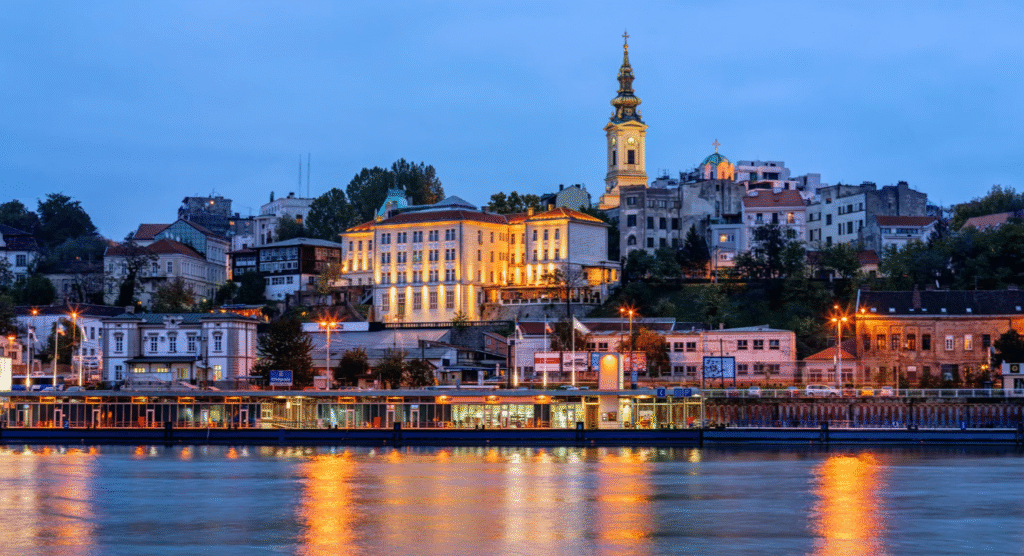
The Cultural Heart of Serbia
Serbia is a country with a deep and diverse history, shaped by centuries of conquests, migrations, and cultural exchanges. Nestled in the heart of the Balkans, it stands as a crossroads of civilizations, where Eastern and Western influences blend seamlessly. From the lively streets of Belgrade to the charming elegance of Novi Sad and the timeless beauty of the Danube River, Serbia’s rich heritage is evident in its architecture, traditions, and vibrant cultural life. Whether exploring the remains of ancient Roman settlements, admiring Ottoman and Austro-Hungarian influences, or indulging in the country’s renowned hospitality, travelers will find themselves immersed in a land that proudly preserves its past while embracing a dynamic future.

The Historic and Vibrant Spirit of Belgrade
Belgrade, the capital of Serbia, is a city that exudes energy and history in equal measure. As one of Europe’s oldest continuously inhabited cities, it has been the site of numerous battles and cultural transformations over the centuries. Strategically positioned at the confluence of the Sava and Danube Rivers, Belgrade has served as a crucial stronghold for various empires, including the Romans, Byzantines, Ottomans, and Austro-Hungarians. Today, it stands as a testament to resilience, its streets filled with stories of the past and a vibrant atmosphere that reflects the city’s unyielding spirit.
The iconic Kalemegdan Fortress, overlooking the meeting point of the two rivers, serves as the historical and cultural heart of the city. This sprawling complex, with its centuries-old walls, towers, and gates, offers breathtaking panoramic views of Belgrade and the surrounding waters. Within its grounds, visitors can explore the Military Museum, which chronicles Serbia’s tumultuous past, as well as numerous statues and memorials dedicated to historical figures. Kalemegdan Park, which surrounds the fortress, provides a tranquil escape from the city’s bustling streets, where locals gather for leisurely walks and sunset views.
The lively district of Skadarlija, often compared to Paris’ Montmartre, is the artistic and bohemian quarter of Belgrade. With its cobbled streets, traditional kafanas (taverns), and live folk music, Skadarlija embodies the city’s old-world charm. Dining at one of its historic restaurants allows visitors to savor Serbian specialties such as ćevapi (grilled minced meat), sarma (cabbage rolls), and kajmak (a rich dairy spread), all while enjoying performances of traditional Serbian music.
Beyond its historical sites, Belgrade is known for its dynamic nightlife, with floating river clubs, lively bars, and music festivals that attract visitors from across the region. Ada Ciganlija, an island-turned-peninsula on the Sava River, is a popular summer retreat, offering beaches, water sports, and cycling trails. The city’s mix of historical depth and modern vibrancy makes it a fascinating destination that appeals to both history enthusiasts and those seeking a lively urban experience.

The Elegance and Culture of Novi Sad
Novi Sad, Serbia’s second-largest city, lies gracefully along the banks of the Danube River. Known for its refined atmosphere, artistic spirit, and impressive Austro-Hungarian architecture, Novi Sad offers a distinct contrast to the bustling energy of Belgrade. As the cultural capital of the country, it is home to numerous festivals, galleries, and historical landmarks that showcase Serbia’s diverse heritage.
The Petrovaradin Fortress, one of the city’s most recognizable landmarks, dominates the skyline with its imposing structure and well-preserved fortifications. Known as the “Gibraltar of the Danube,” this fortress has withstood numerous sieges throughout history and now serves as a cultural hub. Each summer, it hosts the world-renowned EXIT Festival, one of Europe’s largest music festivals, attracting international artists and tens of thousands of visitors. Exploring the fortress’s underground tunnels, viewpoints, and museums offers a glimpse into its strategic importance and historical significance.
Novi Sad’s city center is a showcase of elegance, with its broad boulevards, pastel-colored buildings, and vibrant squares. Liberty Square, the heart of the city, is home to the grand Neo-Renaissance City Hall and the striking Name of Mary Church, whose Gothic-inspired architecture adds to the square’s charm. Dunavska Street, one of the oldest streets in Novi Sad, is lined with charming cafes, bookstores, and boutique shops, making it an ideal place to experience the city’s relaxed and welcoming atmosphere.
The nearby town of Sremski Karlovci, just a short drive from Novi Sad, is a must-visit for wine enthusiasts and history lovers alike. This picturesque town is known for its Baroque architecture, including the stunning Four Lions Fountain and the historic Karlovci Gymnasium, one of the oldest educational institutions in Serbia. The region is also famous for its wine production, particularly the sweet Bermet wine, which was once favored by European royalty. Visiting local wineries and tasting this unique Serbian wine provides an authentic and delightful cultural experience.

The Timeless Majesty of the Danube River
The Danube River, one of Europe’s most significant waterways, has played an essential role in Serbia’s history and development. Flowing through the heart of the country, the Danube serves as a natural link between Serbia’s major cities and a key route for trade, culture, and exploration. Along its banks, travelers can discover stunning landscapes, ancient fortresses, and hidden gems that highlight Serbia’s deep connection to this legendary river.
One of the most breathtaking sections of the Danube is the Đerdap Gorge, also known as the Iron Gates. This dramatic canyon, forming the natural border between Serbia and Romania, is home to some of the most spectacular scenery in the Balkans. The towering cliffs, lush forests, and winding waterways create a mesmerizing landscape that has captivated travelers for centuries. Within the gorge, visitors can find the remains of the ancient Roman fortress of Golubac, strategically perched on the riverbank. Golubac Fortress, with its imposing stone towers and reconstructed sections, offers a glimpse into medieval Serbia’s military architecture and strategic defenses.
Further along the river, the archaeological site of Lepenski Vir provides insight into one of the oldest known settlements in Europe. Dating back over 8,000 years, this prehistoric site showcases unique sculptures, ancient dwellings, and evidence of early human civilization along the Danube. The modern museum at the site preserves these findings while offering an interactive experience that transports visitors back in time.
The river’s significance extends beyond history, as it continues to be a vital source of life and culture for modern Serbia. River cruises along the Danube allow travelers to experience the country from a unique perspective, passing through charming villages, serene landscapes, and culturally significant sites. Along its course, the Danube links Serbia to neighboring countries, reinforcing its historical role as a bridge between cultures and civilizations.

A Journey Through Serbia’s Past and Present
Serbia’s rich heritage is deeply embedded in its cities, landscapes, and people. From the dynamic streets of Belgrade to the refined beauty of Novi Sad and the majestic flow of the Danube River, every corner of the country offers a glimpse into its complex and fascinating history. The remnants of ancient civilizations, the architectural legacies of various empires, and the vibrant traditions that continue to thrive today make Serbia a destination that rewards exploration and discovery.
Beyond its historical sites, Serbia’s warmth and hospitality leave a lasting impression on visitors. Whether savoring traditional cuisine, listening to folk music in a lively kafana, or strolling through the charming streets of a historic town, travelers will find themselves immersed in an experience that is both deeply authentic and undeniably captivating. Serbia remains a land where history meets modernity, where cultures converge, and where every journey is filled with stories waiting to be uncovered.
