
The Allure of Croatia’s Dalmatian Coast
Croatia’s Dalmatian Coast is one of the most breathtaking regions in Europe, offering a combination of stunning Adriatic landscapes, historic cities, and charming island escapes. Stretching along the eastern shores of the Adriatic Sea, this coastline is renowned for its crystal-clear waters, ancient towns, and a rich maritime heritage. Whether wandering through the Roman ruins of Split, basking in the sun on the glamorous island of Hvar, or immersing in the medieval splendor of Dubrovnik, the Dalmatian Coast presents an unforgettable journey filled with history, culture, and natural beauty. With its pleasant Mediterranean climate, world-class seafood, and lively cultural scene, it’s no surprise that this region has become a sought-after destination for travelers seeking both adventure and relaxation.

The Roman Legacy and Vibrant Spirit of Split
Split, the largest city in Dalmatia, is a perfect starting point for exploring the region. This coastal gem seamlessly blends ancient history with modern energy, offering visitors a unique mix of Roman architecture, lively markets, and stunning seaside views. The city’s heartbeat is Diocletian’s Palace, a UNESCO World Heritage Site that dates back to the 4th century. Built as a retirement residence for the Roman Emperor Diocletian, the palace now forms the historical center of Split, with narrow alleyways, hidden courtyards, and well-preserved Roman structures that continue to serve as homes, shops, and cafes.
Walking through the palace complex feels like stepping back in time, with its grand colonnades, marble streets, and ancient temples. The Peristyle, the palace’s central square, is an architectural marvel where visitors can sit on the ancient stone steps and soak in the atmosphere while musicians play traditional Dalmatian tunes. The Cathedral of Saint Domnius, originally built as Diocletian’s mausoleum, offers a panoramic view of the city from its bell tower, rewarding those who climb its steep steps with breathtaking vistas of the coastline and the nearby islands.
Beyond its historic core, Split boasts a lively waterfront promenade, known as the Riva. This sun-drenched esplanade is lined with palm trees, cafes, and restaurants, making it a perfect spot to enjoy a leisurely coffee or an evening stroll. Food lovers will appreciate the city’s bustling green market, where fresh produce, seafood, and local delicacies showcase the best of Dalmatian cuisine. For a relaxing escape from the city’s energy, Marjan Hill offers shaded hiking trails, scenic viewpoints, and hidden beaches that provide a tranquil retreat with stunning views of the Adriatic.

The Island Paradise of Hvar
A short ferry ride from Split, the island of Hvar is known for its stunning landscapes, lavender fields, and vibrant nightlife. Frequently ranked as one of the most beautiful islands in the world, Hvar offers a perfect blend of relaxation and excitement. Its main town, also named Hvar, is a picturesque coastal settlement with a charming old town, a lively harbor, and a reputation as a playground for the rich and famous.
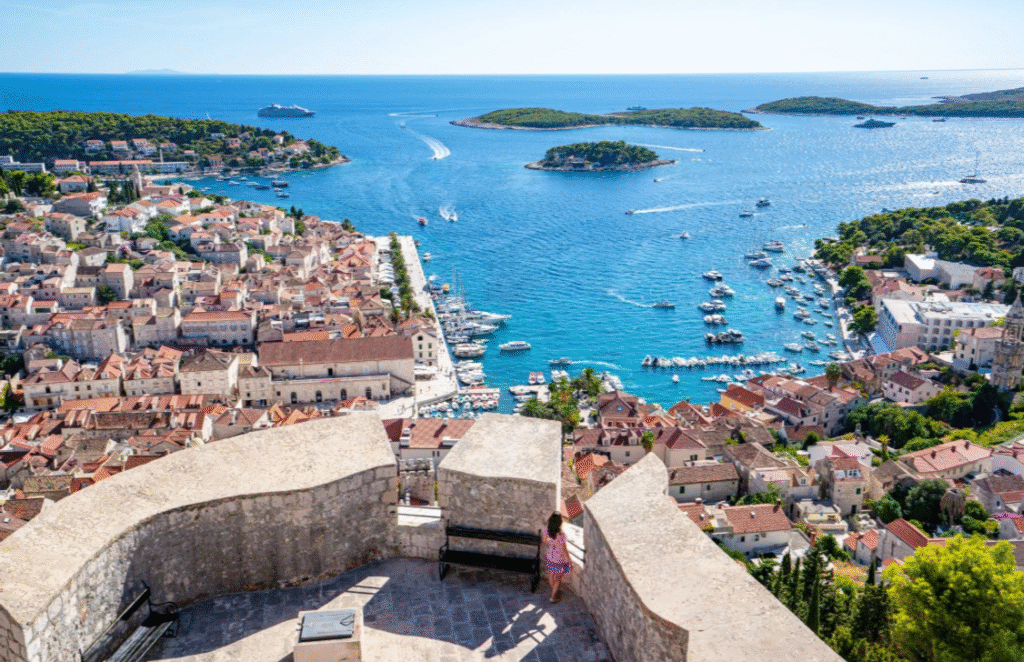
Hvar’s historic center is a delight to explore, with its cobbled streets, elegant squares, and well-preserved architecture. The main square, Trg Svetog Stjepana, is one of the largest in Dalmatia and is dominated by St. Stephen’s Cathedral, a Renaissance masterpiece that reflects the island’s Venetian influences. Above the town, the Spanish Fortress (Fortica) provides a panoramic view of Hvar and the surrounding Pakleni Islands, a collection of idyllic islets that are perfect for a day of sailing, swimming, and sunbathing.
For those seeking a more laid-back experience, the island’s interior offers rolling vineyards, charming villages, and fields of fragrant lavender, particularly stunning in early summer. Wine enthusiasts will find Hvar’s wineries to be a hidden treasure, producing high-quality local wines such as Plavac Mali and Bogdanuša. A visit to the town of Stari Grad, one of the oldest settlements in Croatia, reveals a quieter side of Hvar, with its stone-paved alleys, rustic taverns, and a rich cultural heritage that dates back to Greek antiquity.
Hvar is also known for its stunning beaches, ranging from lively, social spots to hidden coves accessible only by boat. Dubovica Beach, a postcard-perfect bay with crystal-clear waters, is a favorite among visitors seeking tranquility and natural beauty. Meanwhile, the Pakleni Islands offer a variety of secluded beaches and pristine lagoons, making them a must-visit for those looking to explore beyond the main island.

The Timeless Elegance of Dubrovnik
No journey along the Dalmatian Coast would be complete without visiting Dubrovnik, often referred to as the “Pearl of the Adriatic.” Enclosed within massive stone walls, Dubrovnik’s Old Town is a UNESCO-listed masterpiece, offering a stunning blend of Gothic, Renaissance, and Baroque architecture. The city’s dramatic setting, surrounded by the azure waters of the Adriatic, has made it one of the most photographed and visited destinations in Croatia.
The best way to experience Dubrovnik’s medieval grandeur is by walking along its ancient city walls. Stretching nearly two kilometers, these walls offer unparalleled views of the terracotta rooftops, the shimmering sea, and the nearby Lokrum Island. Along the way, visitors can explore historic fortresses such as the imposing Fort Lovrijenac, which has played a vital role in the city’s defense for centuries.
Dubrovnik’s main street, Stradun, serves as the heart of the Old Town, lined with historic buildings, charming cafes, and boutique shops. Landmarks such as the Rector’s Palace, the Franciscan Monastery, and the Sponza Palace highlight the city’s rich history and architectural elegance. The Old Port, once a bustling maritime hub, now serves as a gateway to nearby islands and a picturesque spot to enjoy a sunset over the Adriatic.
For those looking to escape the crowds, Lokrum Island, just a short boat ride from Dubrovnik, provides a lush retreat with botanical gardens, rocky beaches, and the ruins of a medieval monastery. Adventurous travelers can also take a cable car ride up Mount Srđ, where a breathtaking panoramic view of Dubrovnik and the coastline awaits.
Dubrovnik’s culinary scene is another highlight, with seafood restaurants serving freshly caught fish, octopus salads, and Dalmatian specialties such as black risotto and peka, a slow-cooked dish prepared under a metal dome. The city’s wine bars and coastal terraces provide the perfect setting to unwind after a day of exploration, sipping on a glass of local Malvasia wine while gazing at the Adriatic horizon.

The Magic of the Dalmatian Coast
The Dalmatian Coast is a destination that captivates visitors with its perfect combination of history, culture, and natural beauty. From the ancient Roman streets of Split to the sun-kissed shores of Hvar and the medieval grandeur of Dubrovnik, each stop along this coastline offers a unique and unforgettable experience. Whether seeking adventure, relaxation, or a deep dive into Croatia’s rich heritage, the Dalmatian Coast delivers an unparalleled journey through one of the most stunning regions in the Mediterranean. With its breathtaking scenery, warm hospitality, and timeless charm, it is no wonder that travelers return time and time again to explore the wonders of this Adriatic gem.
